Common starting questions
Useful answers before the first shovel.
These are starting points rather than universal specifications; soil, climate, access, and intended play can change the right solution.
How much does a backyard bocce court cost?
Cost depends on excavation, access, drainage, base depth, edging, surface, lighting, and local labor. A simple DIY recreational court can cost far less than a professionally built, drainage-heavy or tournament-style installation. Compare scopes layer by layer rather than relying on one headline number.
What is the best surface for a bocce court?
There is no single winner. Mineral surfaces usually provide a more traditional, responsive game but require grooming and moisture management. Artificial turf is predictable and lower-maintenance but plays differently. Climate, desired speed, player expectations, pets, and care tolerance should drive the decision.
What dimensions should a home court use?
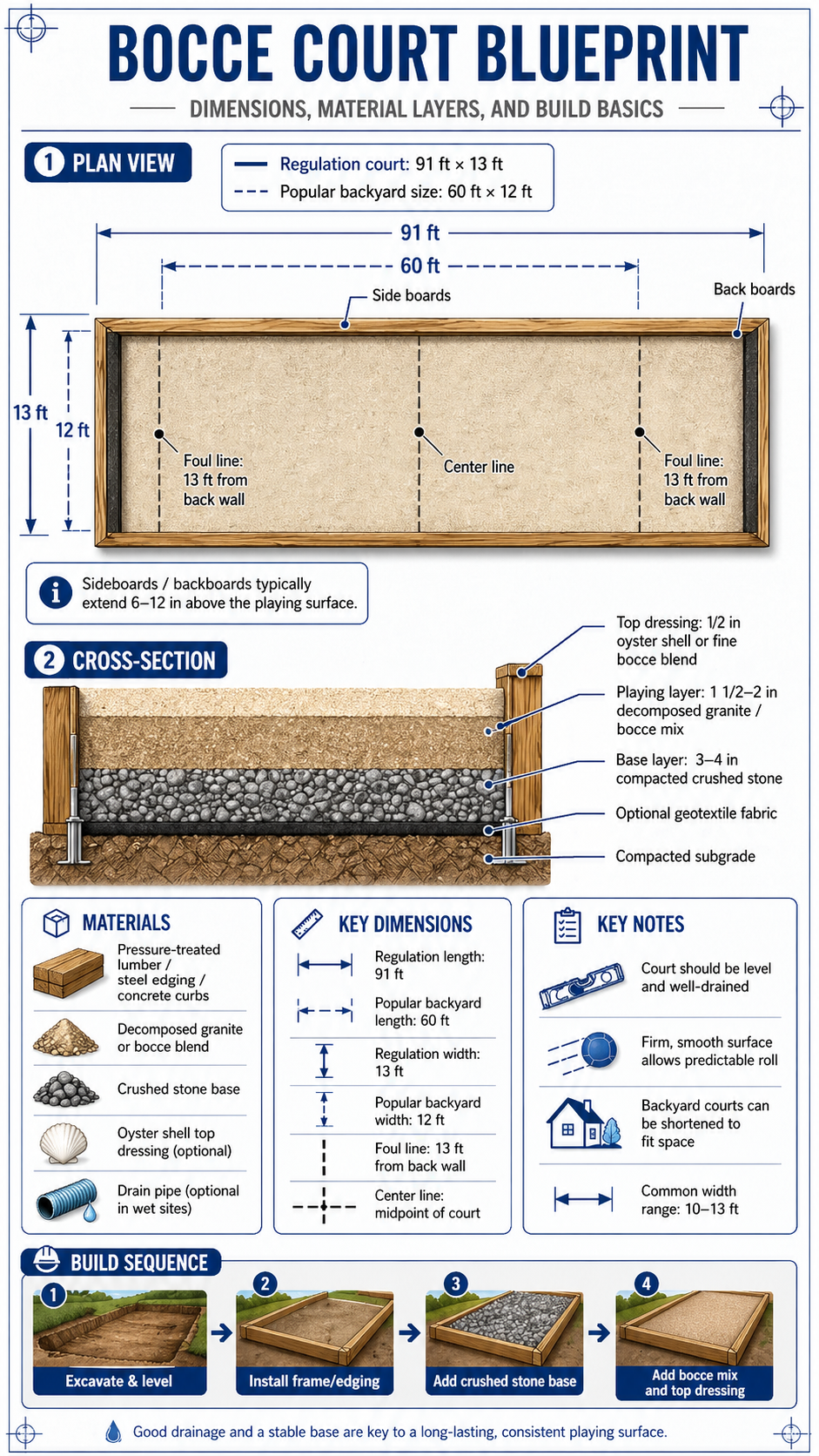
Official-style courts are much longer than many backyards can accommodate. Recreational courts can be shortened successfully if width, throwing room, side access, and proportions remain comfortable. Begin with the available site and the way people will use it, then choose dimensions deliberately.
Can a homeowner build the court without a contractor?
Yes, when the site is accessible, relatively level, well understood, and the owner can excavate, move aggregate, compact in stages, and control drainage accurately. Professional input becomes more valuable with steep grades, poor soil, difficult access, retaining conditions, septic systems, or demanding finish tolerances.
How much maintenance should I expect?
Maintenance varies sharply by surface. Loose and mineral finishes need debris removal, occasional watering or rolling, leveling, and material replenishment. Turf needs cleaning, brushing, infill attention, and drainage checks. Every court should be inspected after severe weather and corrected before local damage spreads.